PNC Family FInds
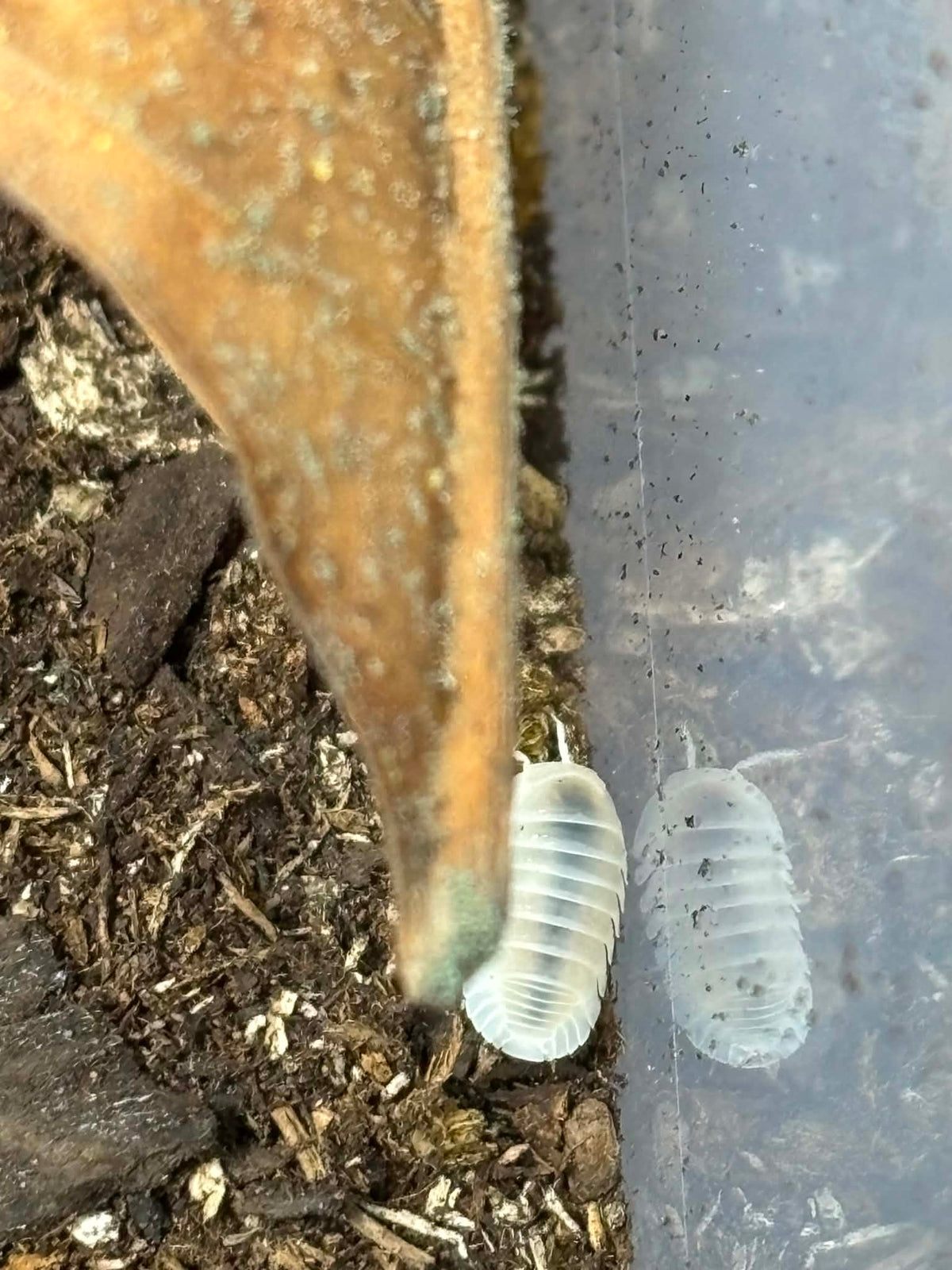
CUBARIS MURINA--GLACIER 10+ Pods
CUBARIS MURINA--GLACIER 10+ Pods
Couldn't load pickup availability
- A flawless, ghostly "white-out" marvel that brings chilly elegance to the forest floor.
- “"Glacier" is the white out expression in C. murina. These little guys are white all over- their legs, antennae, body, and even eyes!” -- This breathtaking phenotype completely strips away the dark slate-gray pigment of the classic wild-type line, resulting in a striking translucent, frosty-silvery aesthetic. “...any coloration you see in this morph is likely to be due to its translucence. so you're actually seeing what's inside the isopod. or perhaps coloration taken in from food sources... Despite looking like a delicate, rare gemstone, they inherit the legendary, bulletproof hardiness of the Cubaris murina family. They offer elite, designer-level Cubaris appeal without the stress of fragile husbandry, making them an incredibly reliable and beautiful choice for any keeper.
- Best Suited For: High-contrast display terrariums where they vividly pop against dark soil and cork bark, beginner Cubaris breeders, and peaceful bioactive setups.
- Quick Care: “...Glacier handles a wider range — 55 to 80% — than the standard Little Sea or Papaya recommendations.” -- This incredible adaptability makes them highly forgiving of minor climate dips. Provide a standard moisture gradient with a damp corner of sphagnum moss. “Native to North America, this species is very protein-dependent...” Regularly boost their diet of hardwood leaf litter with high-protein snacks (like fish flakes or shrimp pellets) and keep plenty of calcium accessible to fuel their steady colony growth.
Isopods (roly-polies or pillbugs) are essential cleanup crews for bioactive terrariums, excellent natural recyclers of decaying organic waste, and popular, low-maintenance pets for invertebrate hobbyists. Iso Pods are Great For: Bioactive Enclosures & Clean-Up Crews Eating waste: They consume animal feces, shed skin, and leftover food. Controlling mold: They eat decaying plant matter to stop mold and fungus overgrowth. Recycling nutrients: They break down heavy debris and return vital nutrients to the soil for live plants. Feeding pets: They provide a safe, natural live food source or calcium-rich snack for small reptiles and amphibians. Low-Maintenance Pets & Collecting Quiet and clean: They stay silent and do not require live hunting insects for food. Unique colors: Rare morphs and species feature striking patterns like zebra stripes or duck-like shapes. Inexpensive hobby: Most common starter varieties need minimal space, like a small plastic tub with damp leaf litter and soil.
Share